Two or three times a year I’ll get together with my former co-worker friend Alicia for a local nature hike. When it comes to nature, she is a bit of a walking encyclopedia. Alicia is so knowledgeable. We chose July 31st for a hike and I asked where would she like to go. The answer without hesitation was Tiny Marsh. A mere 20 kilometers from my home, it is located at 500 Tiny Flos Townline, Tiny Ontario.
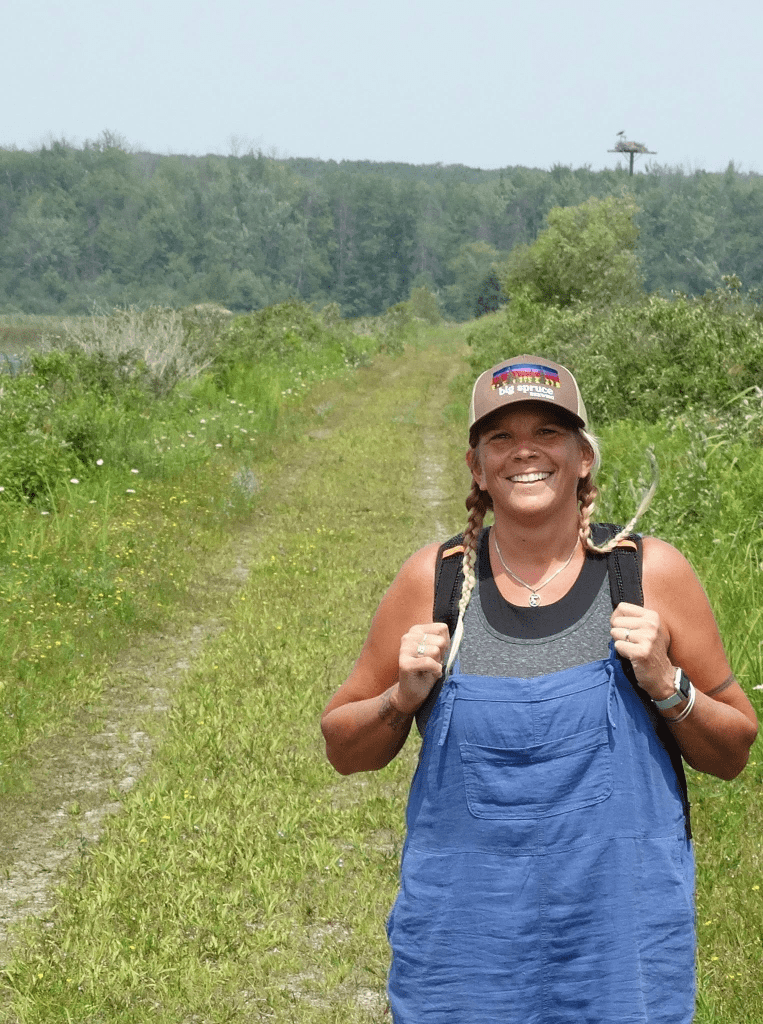
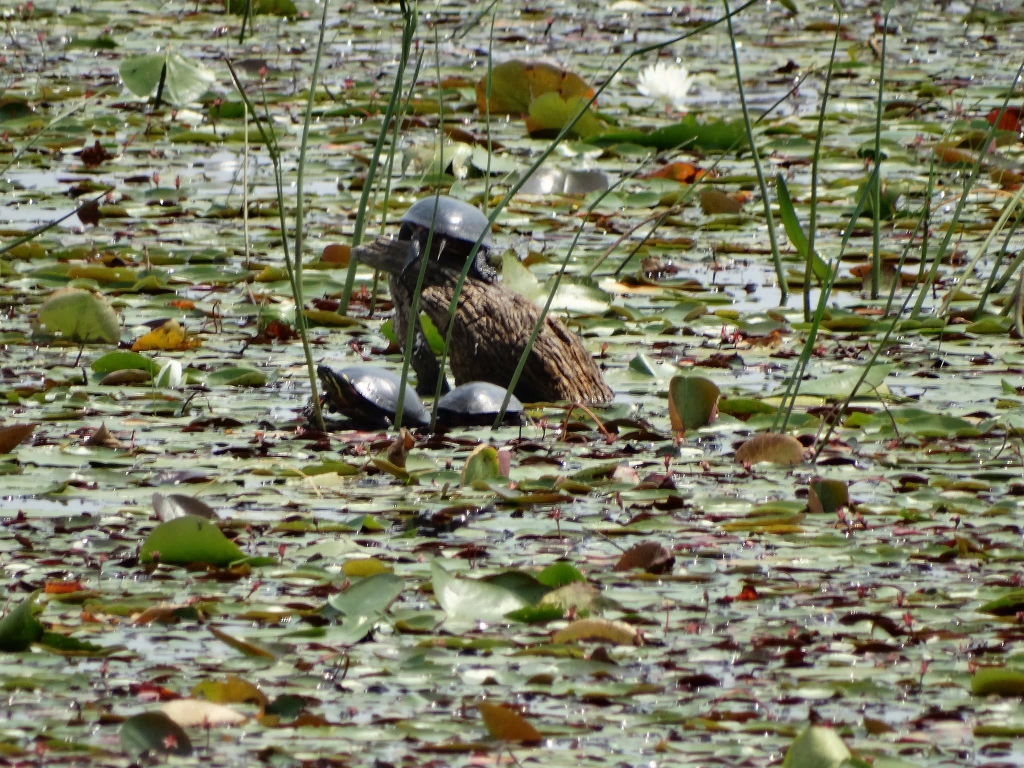
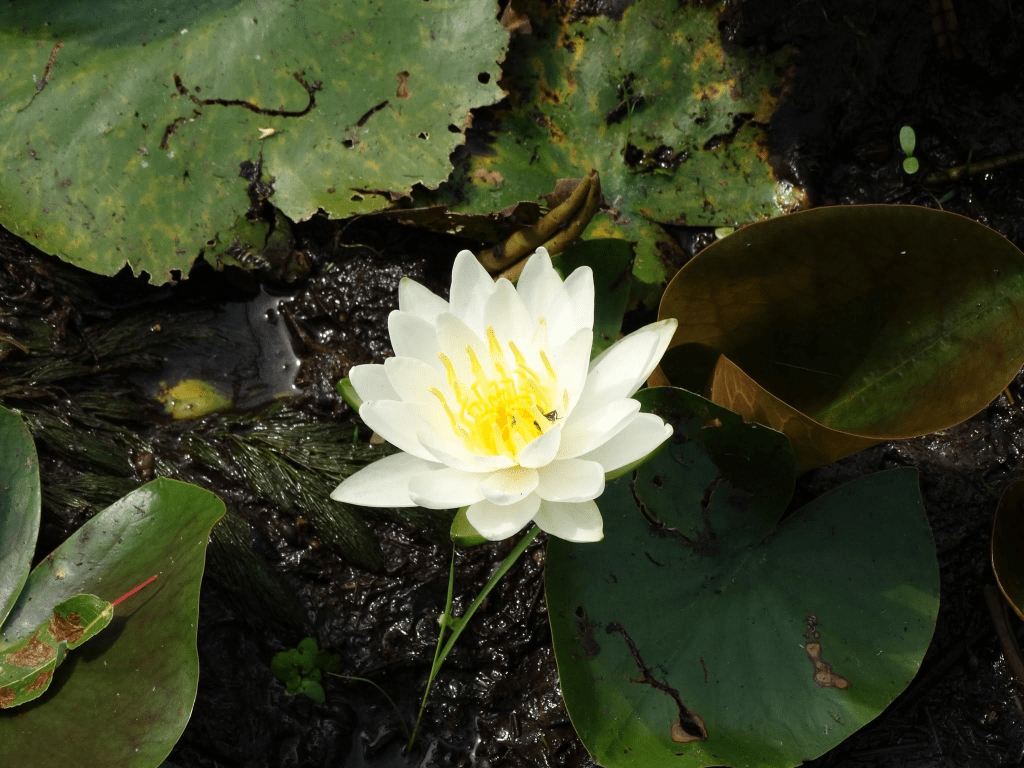
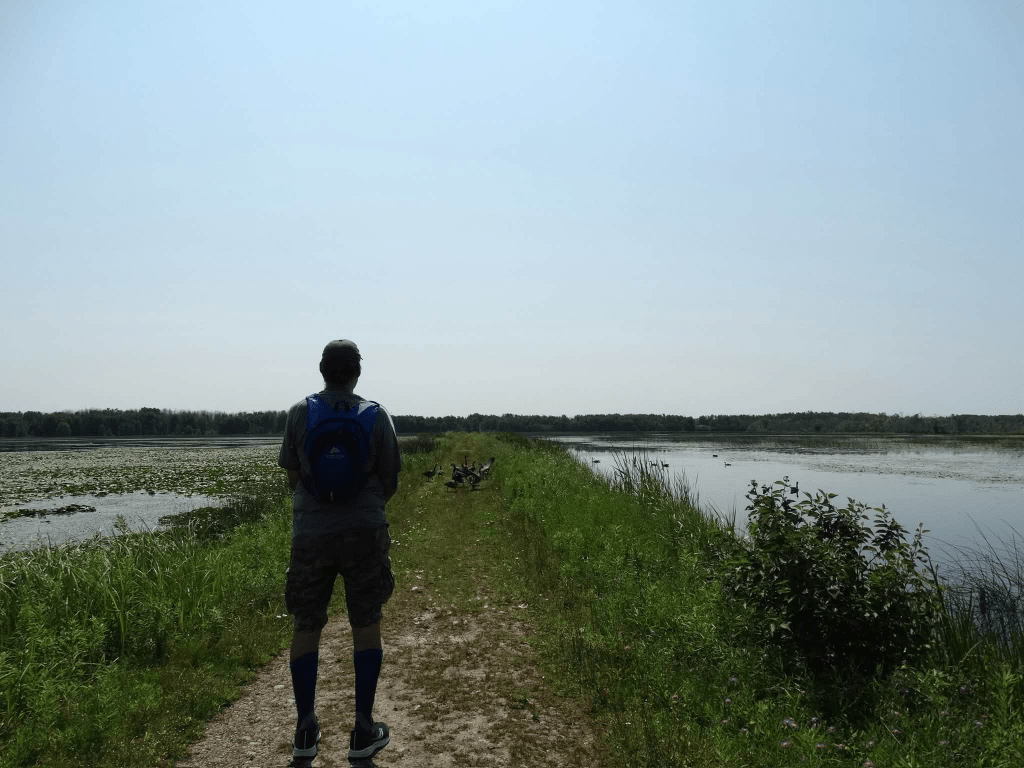
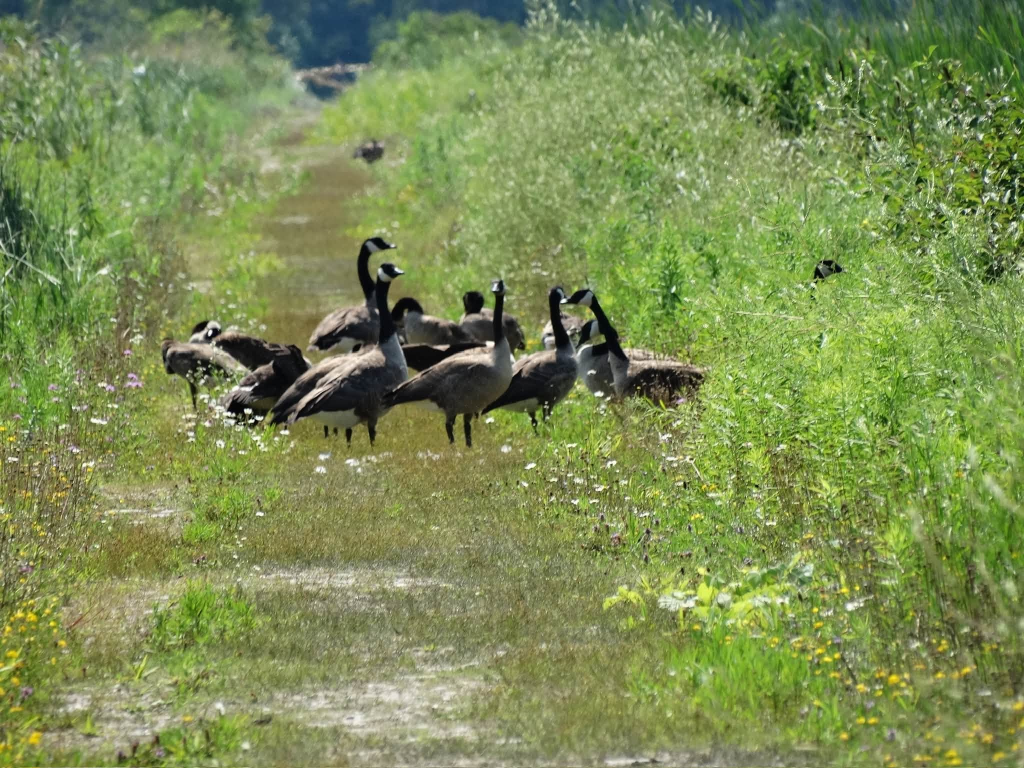
It wasn’t planned this way, but we also went hiking in Tiny Marsh exactly a year ago, July 31, 2025. Where there is water, there is wildlife. The exciting thing is, you never know what you might see. This year didn’t disappoint. Alicia has a great camera with a zoom lens far more powerful than my binoculars. That’s the nice thing with powerful cameras is you get great photos without disturbing the wildlife. Except for the 1st photo and last infographic photo in this article, all photos are from Alicia, with a mix from both last year’s hike and this year’s hike. I was planning on writing an article on Tiny Marsh after last year’s hike. But it never got finished.
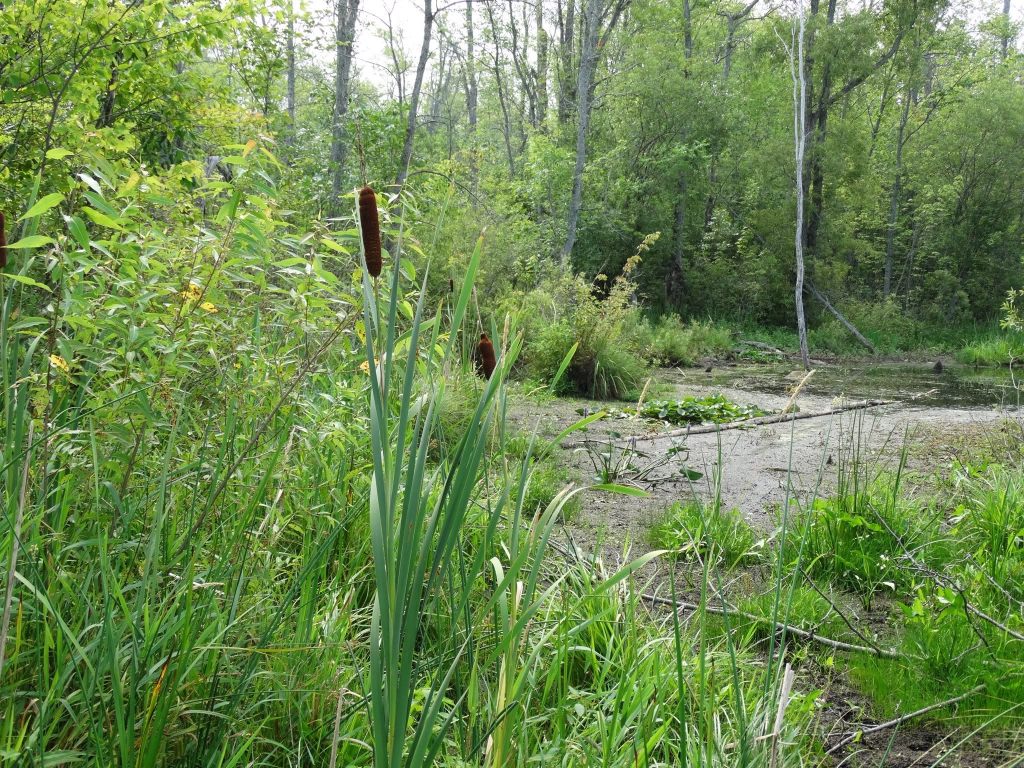
From the book “A Nature Guide to Ontario” Wake, Winifred Cairns 11 August 2014. 1997. University of Toronto Press. 9780802027559. 204–205 (which you can read in its entirety here) on pages 204-205 it describes Tiny Marsh, “Originally a lake rimmed with forests, this wetland is now intensively managed to provide habitat for waterfowl during breeding and migration. The area consists of 600 hectares (1,480 acres) of marsh and 300 hectares (740 acres) of forests and fields“.
The vast forests that at one time surrounded this lake are all long gone, with the surrounding land across the road now tile drained farmland as far as the eye can see. The farmland is always planted in monoculture corn or soybean crops. Once you arrive at the parking lot at Tiny Marsh, you are immediately greeted by birdsong. The lake and land immediately surrounding it survives.
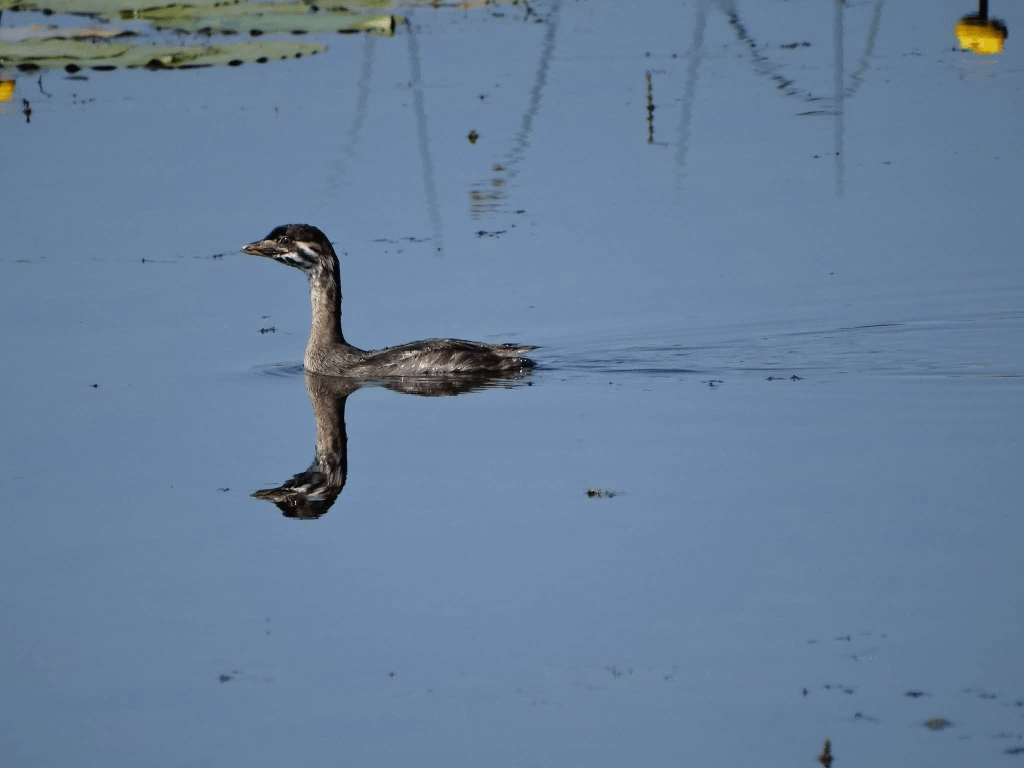
Tiny Marsh is the first provincially owned and managed wetland in the province of Ontario. It is administered by M-T-M Conservation Association. This non-profit conservation group also looks after two other wetland areas, Marl Lake, near Wasaga Beach and Matchedash Bay, north of Coldwater. About 250 different species of birds have been spotted at Tiny Marsh including ospreys, over 10 different types of ducks, and the provincially rare black terns and least bitterns. You never know what you might encounter with each visit to Tiny Marsh.
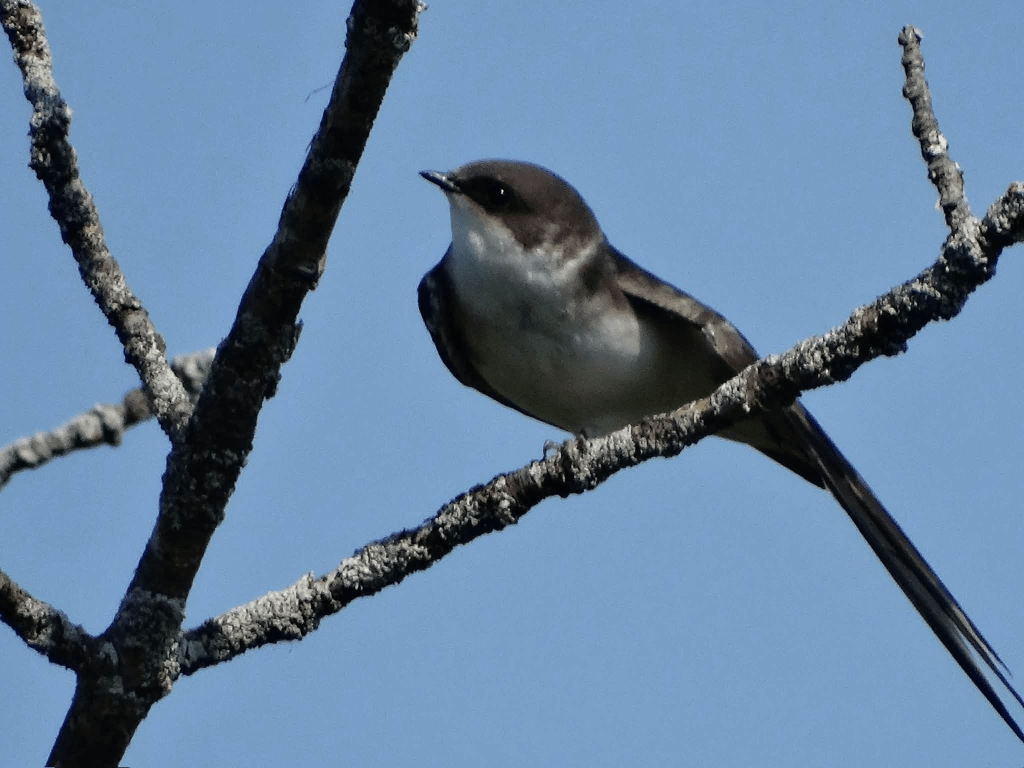
The website Ontario Nature Trails list nine trails totaling 17 kilometers at Tiny Marsh. As noted on the website, “Dogs must be leashed”. A reminder, this is a wildlife area. The first trail that Alicia and I hit both last year and this year was the 1.3 kilometer Loop Trail, also sometimes known as the Beaverland Trail. The trail is rated “Easy”. Though if you attempt this hike during mosquito season without insect repellent, I would be tempted to change that rating to “Challenging”. I originally applied some Deet-Free Lemon Eucalyptus repellent. But it didn’t work at all against these aggressive Tiny Marsh blood thirsty mosquitoes. So I dug deeper in my pack for the heavy duty repellent.
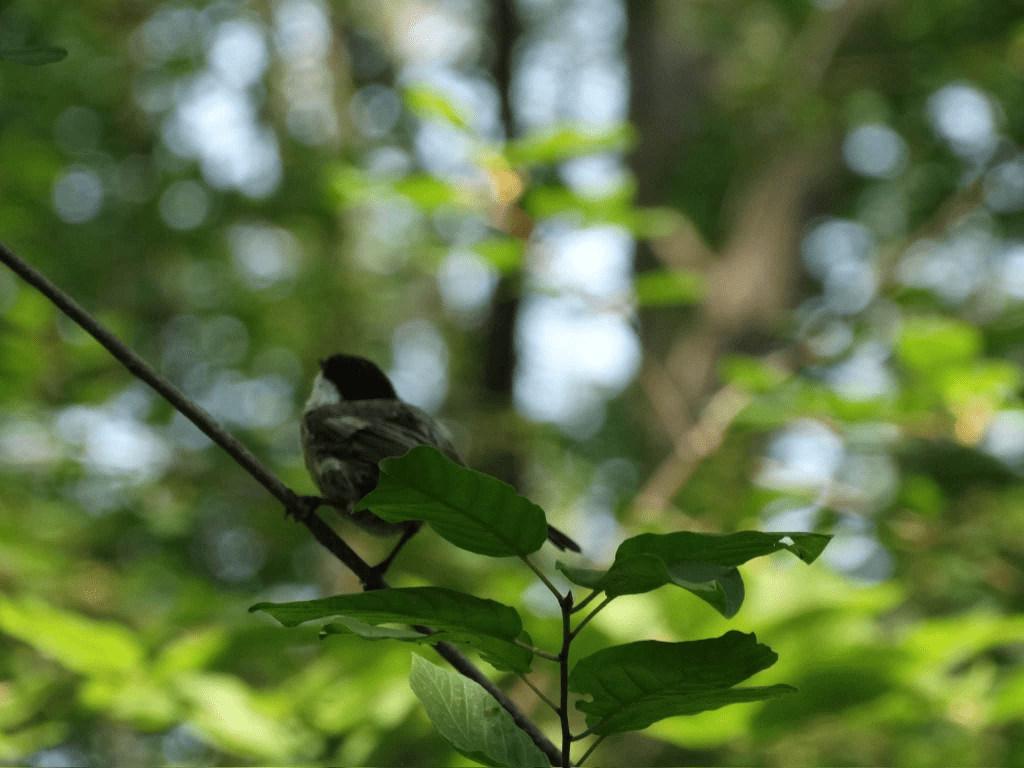
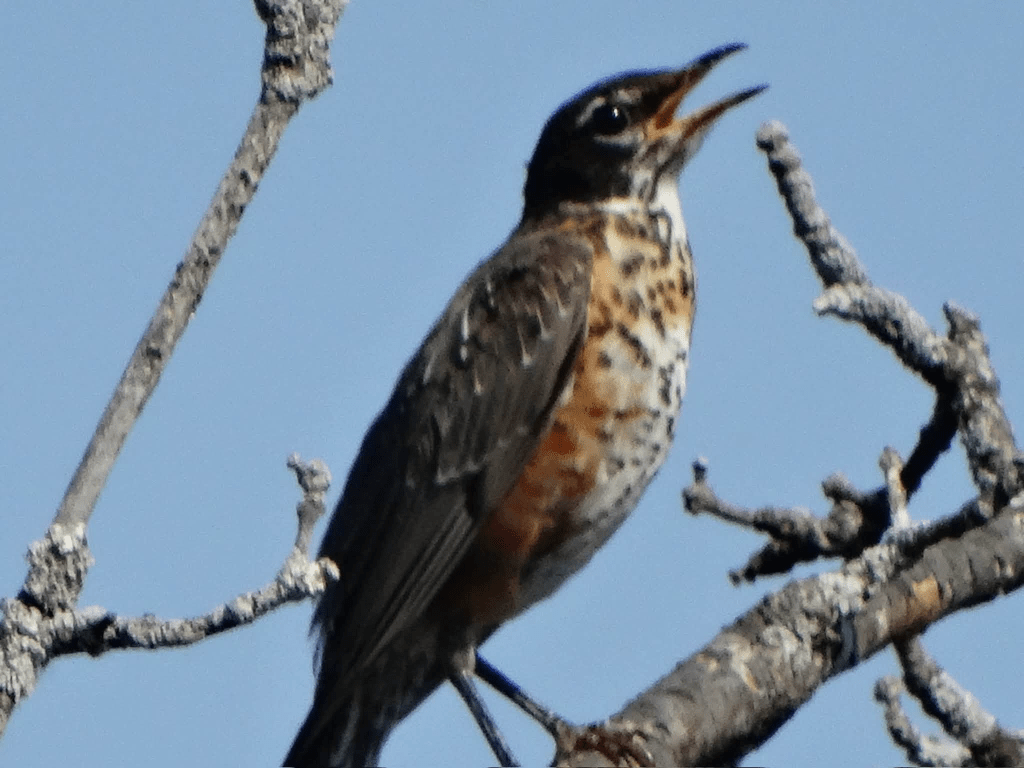
The Loop Trail includes a dam for water management to provide an optimal stable habitat for different animal species. Past the dam you will soon be walking through tall grass at the edge of a field. Then the trail bends into a forest which leads to a boardwalk over a marshy area. After the boardwalk ends, the loop trail continues to the right. Instead, Alicia and I turned left, which quickly leads to the lookout tower. Being super quiet on the tower, it is amazing all the wildlife that can be spotted.
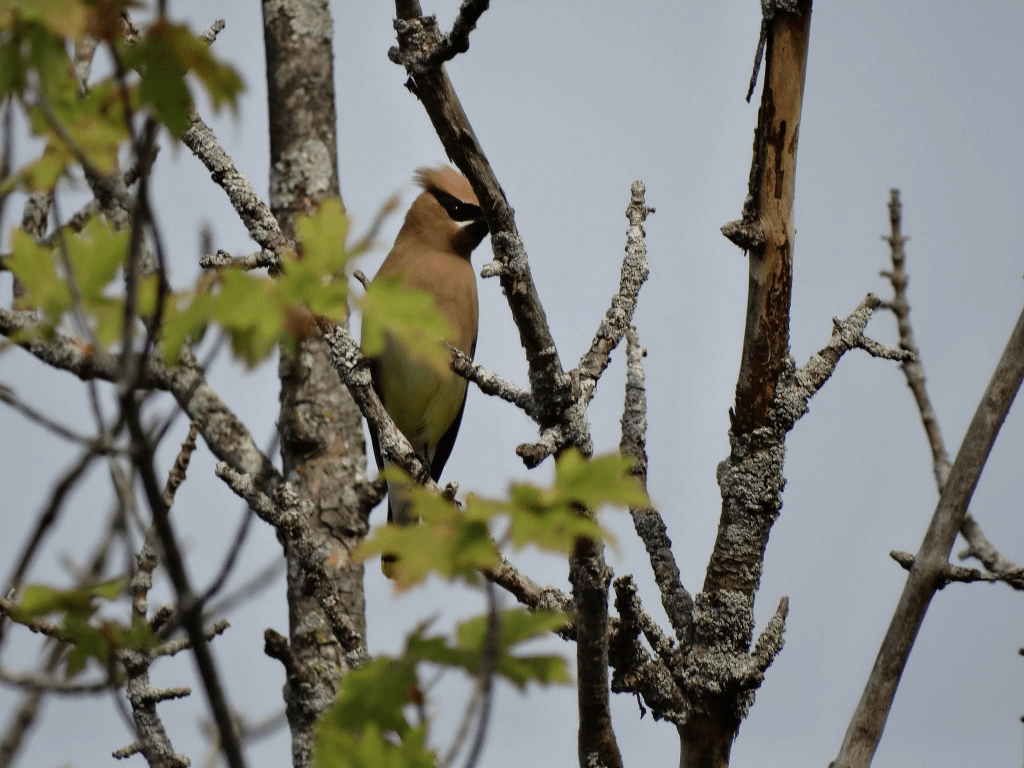
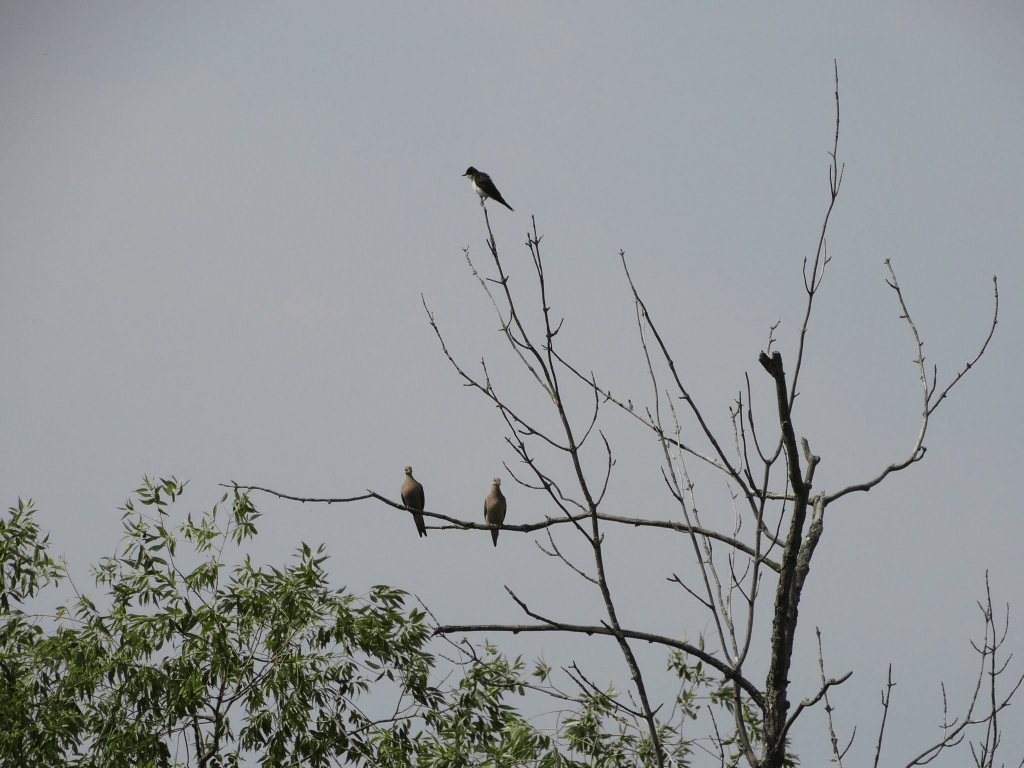
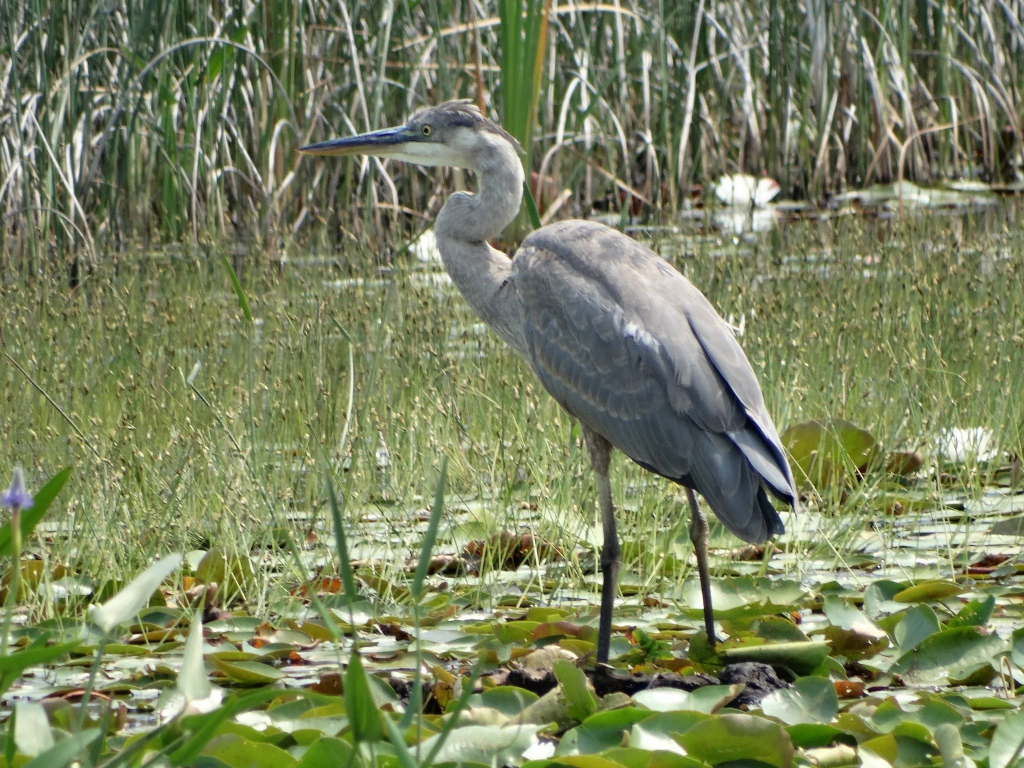
After the Loop Trail, we went right back to where we started, and then continued on to the Dike Trail. At the beginning of the dike trail is another dam. The dikes were also built for wildlife habitat. They act as a buffer and protection in this open area so plants and wildlife can thrive. Out on the dike the sun can get quite hot on a summer day. Please make sure you have plenty of water and sun protection whether it is sunblock lotion or sun protection through a good hat and protective clothing.
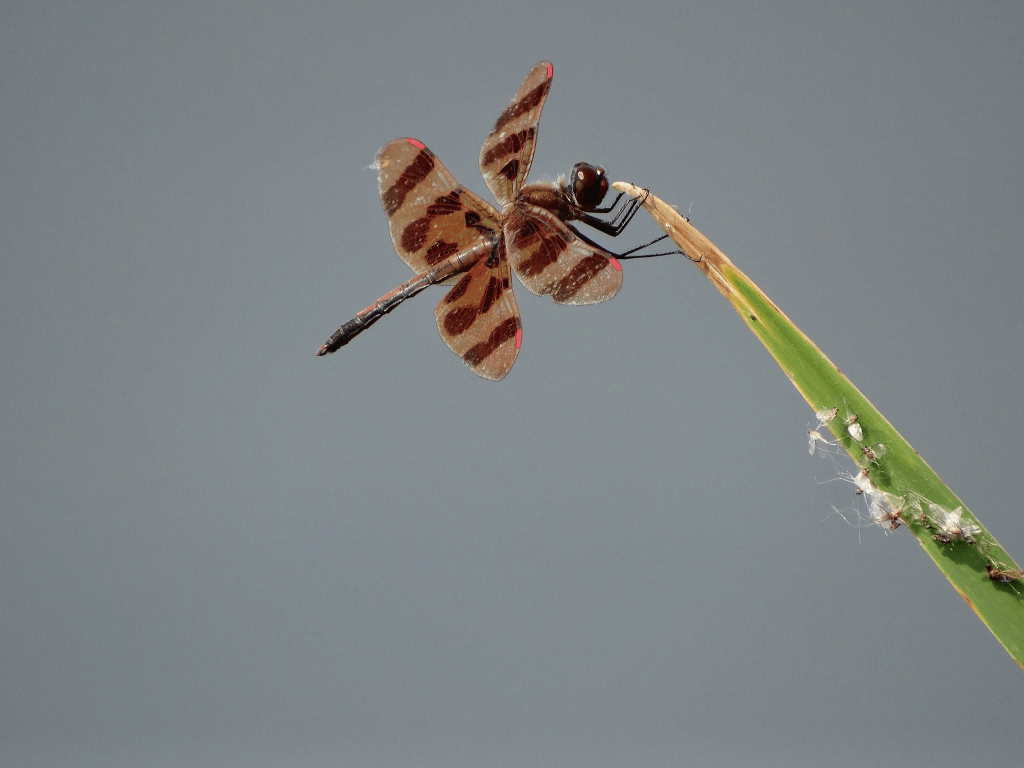
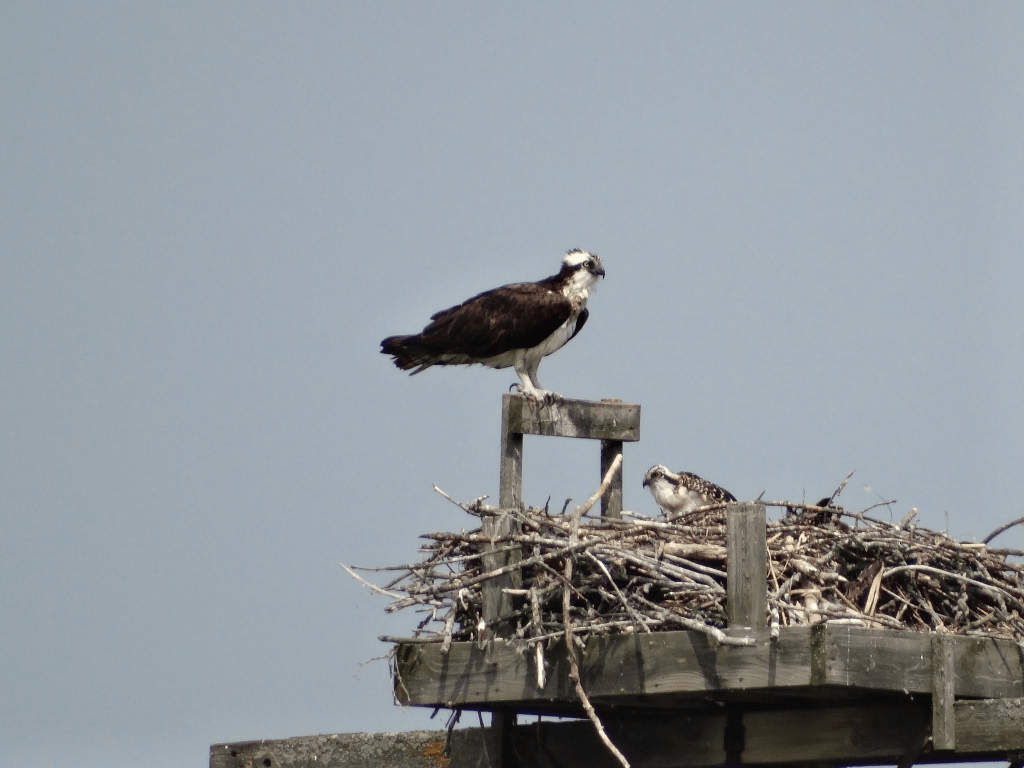
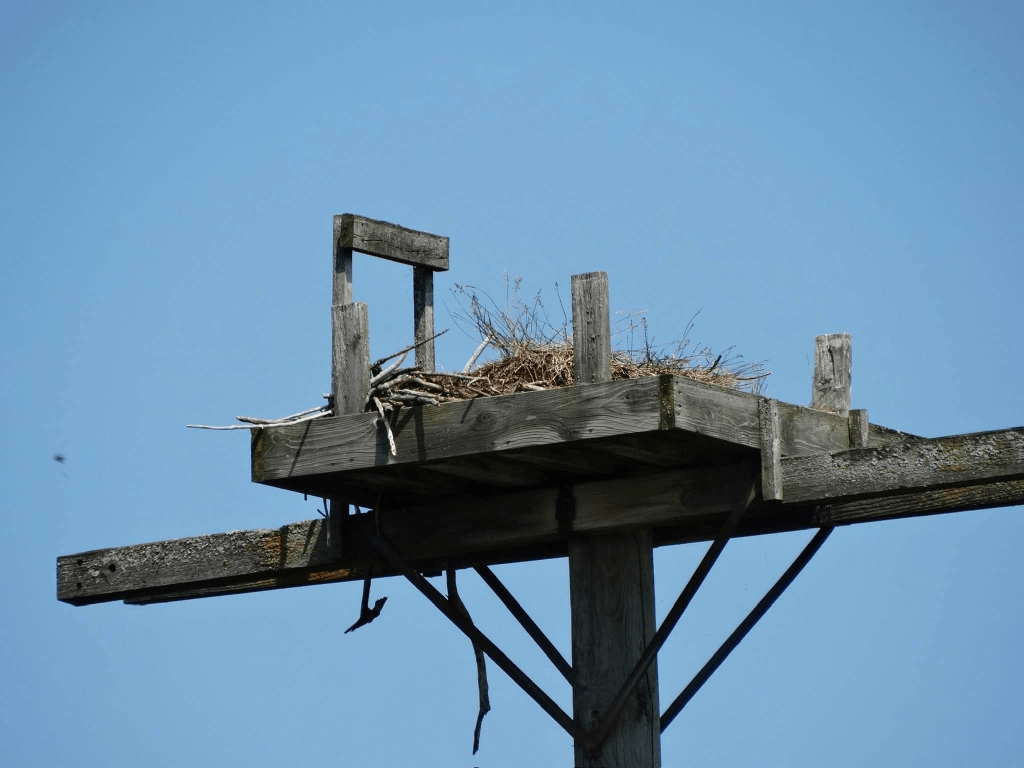
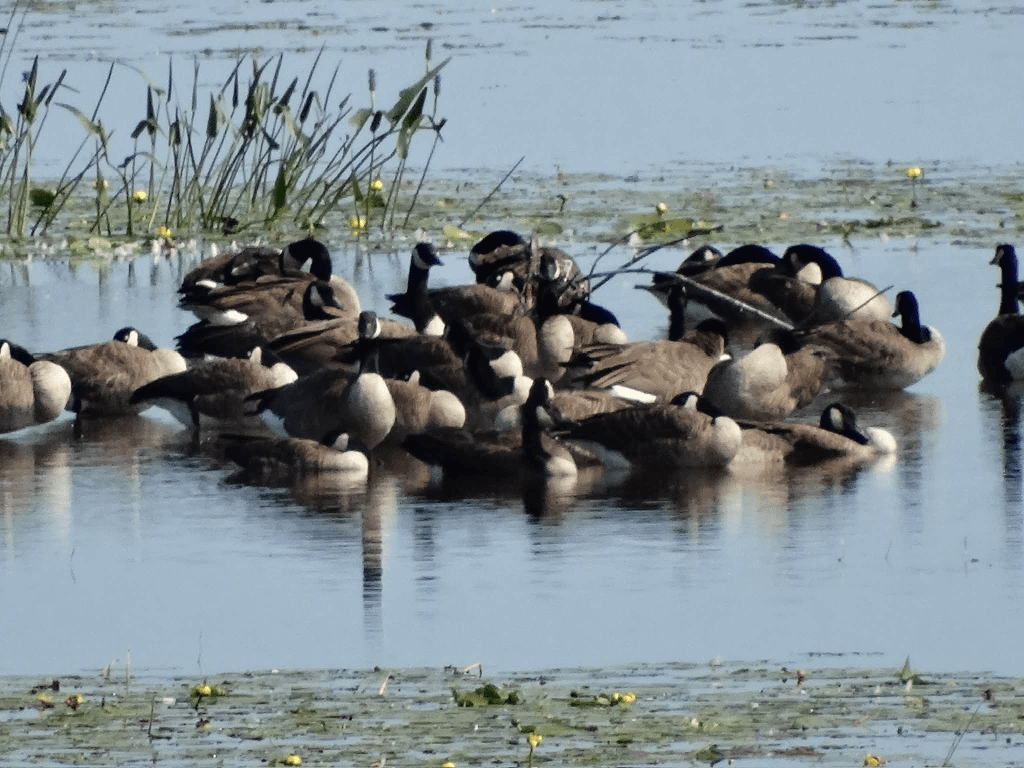
On the dike trail you might encounter amphibians such as frogs or insects such as dragonflies and butterflies. You will also likely spot plenty of waterfowl. A real treat last year was the nesting osprey high above the dike on a special pole and platform. Unfortunately the osprey wasn’t there this year.
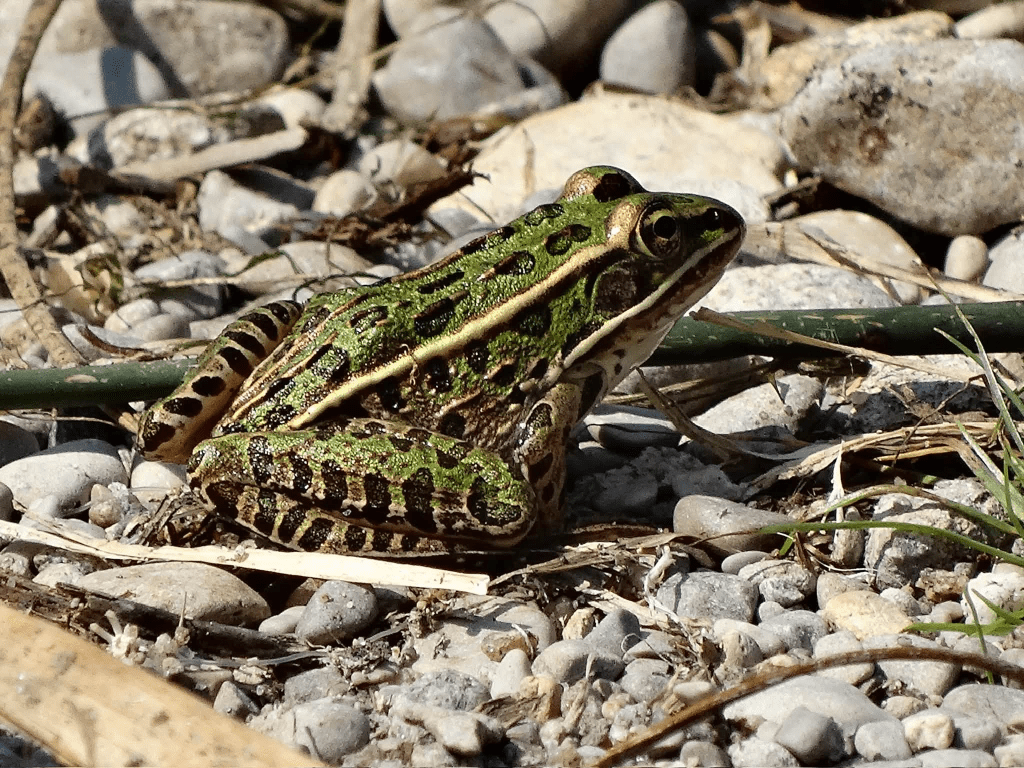
After a few hours in nature our hearts are full. Even though we had only covered about 4 to 5 kilometers in a few hours, it had been a wonderful day. Tiny Marsh is not the place to cover as much distance in as little time as possible. You would miss so much. With water levels controlled by dams, dikes, ditches and transfer systems, it may not be the pristine wilderness that there was 250 years. But with management this gem in Tiny Township (where the name Tiny Marsh comes from) helps provide survival for many species of animals in an area experiencing high rates of habitat loss through industrialized agriculture and urban sprawl. Thank you MTM Conservation Association for all the work you do. They are helping vulnerable species much like I’ll plant a pollinator garden to help the threatened Monarch Butterfly and other pollinators. It’s not pristine wilderness. But it works.
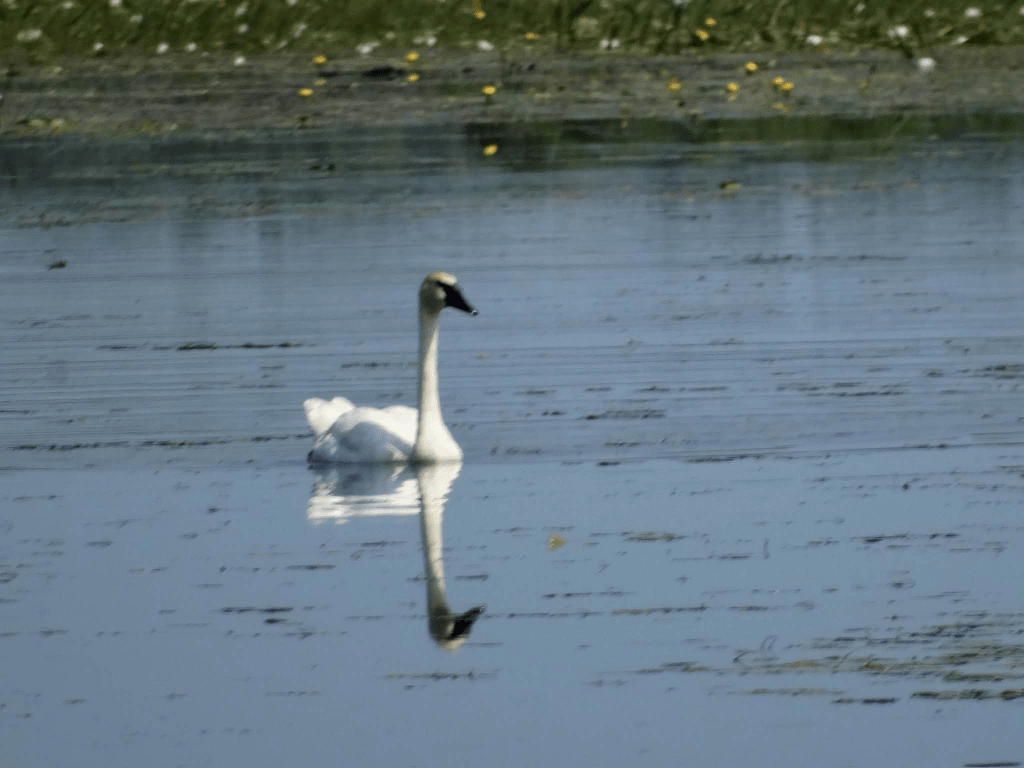
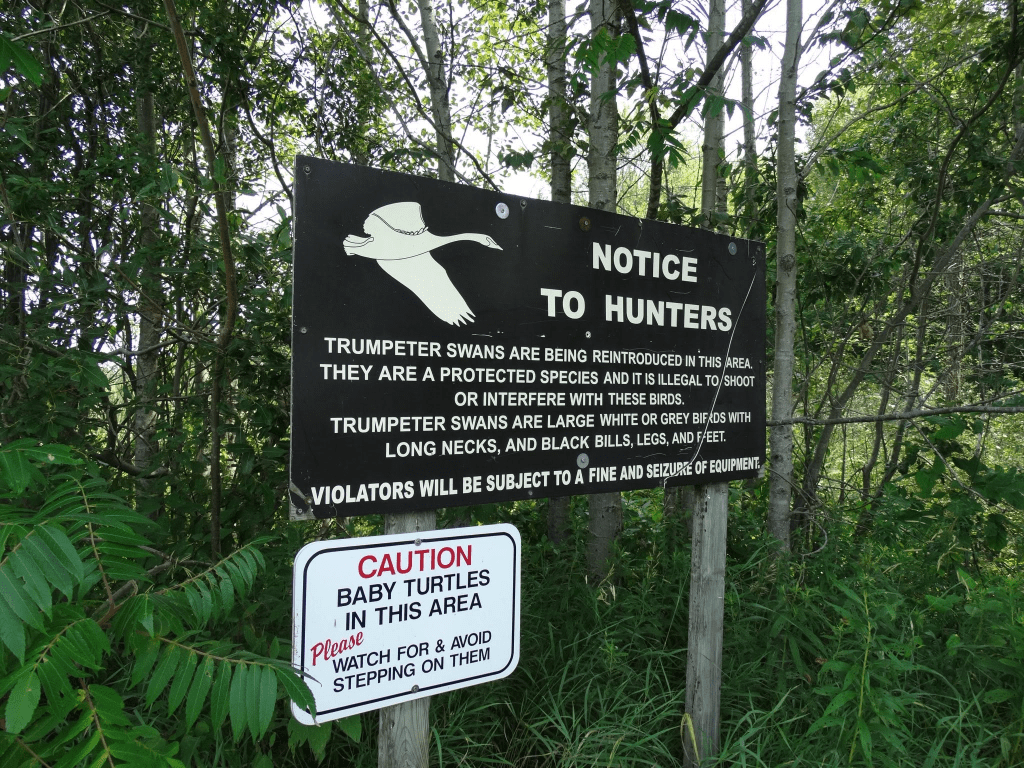
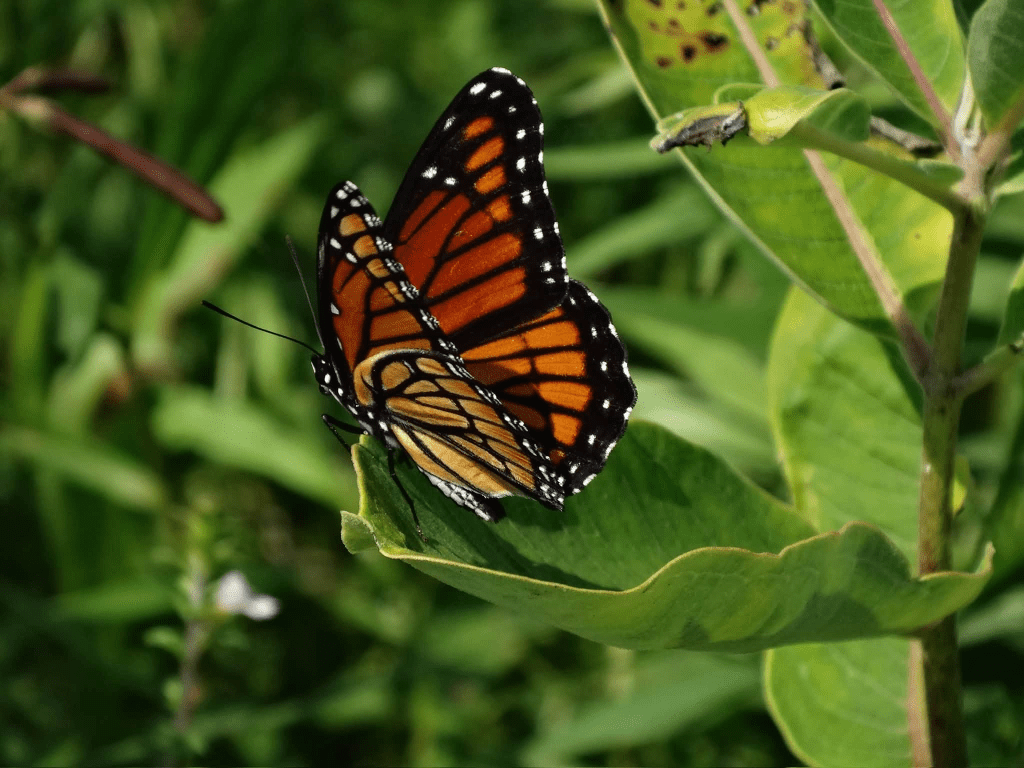
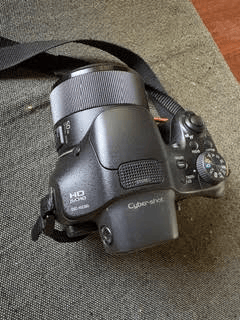
Disclaimer: All written content is my own original creative, expressive content with no Artificial Intelligence (AI) assistance. Credits given to the source of any excerpts used in the article. Except for the 1st photo and last infographic, all photos are taken by Alicia Freeborn using her Sony Cyber-Shot dsc-hx300 camera (which came out in 2013). No digital editing with these photographs and definitely nothing AI. Doing what I can in my little corner to not support this technology oligarchy, data centers and environmental destruction.


What wonderful photos! Alicia’s camera must be incredible. The one of the monarch butterfly is especially beautiful.
It is encouraging to see how much can be achieved when wetlands are protected and carefully managed, especially in an area surrounded by intensive agriculture and development. And I’m with you on the mosquitoes. An “Easy” trail can become very challenging very quickly when the mosquitoes decide you are lunch! I hope the heavy duty repellent worked! 😂
The best hikes are the ones where you barely notice the distance because you are too busy looking around. What a lovely tradition to have with Alicia!
LikeLiked by 2 people
Thank you so much, Catrina. I can’t remember the make and model of Alicia’s camera, but it is an older digital model. At the right place at the right time, she bought it for $10 at a thrift store. Not knowing if it even worked, for $10 he thought she would take a chance on it.
Tiny Marsh is such a contrast with all the surrounding farmland. It is really nice to have someone like Alicia who really appreciates nature to share it with. She is like a daughter figure to me. On the final day of my warehouse job, before I took the crossing guard position the company gave a farewell party. Alicia came up to me, gave me a hug and said over the years I’ve been a father figure. Her grandparents, her own mom and dad plus her husbands grandparents and mom and dad have all died. I didn’t realize she looked up to me like that, and I feel it is extremely important to keep connected. It has been very special.
The heavy duty repellent did work for us. Some people do have reactions to the chemical Diethyltoluamide (Deet), but I’ve been fortunate. There seems to be an increase in Canada of these mosquito and tick-borne diseases and Deet is the most effective ingredient we have to keep those bugs at bay.
LikeLiked by 1 person
Ah, wait, I remember you once mentioned that story about Alicia!
It must have meant a lot to hear her say that you had been a father figure to her, especially when you hadn’t realized that was how she saw you. It sounds like you have a very special relationship, and I agree that keeping those connections alive is so important.
I can see why your hikes together mean more than just getting out into nature!
I hope you will get more opportunities now that autumn is close.
LikeLiked by 1 person
Thank you so much, Catrina. I hope so too. 🙏
LikeLiked by 1 person
Gorgeous photos!
LikeLiked by 1 person
Thank you very much, Jennie. I appreciate this. ☺️
LikeLiked by 1 person
You are welcome.
LikeLiked by 1 person
Great series of photos that mesh so well with your writing, Carl. A perfect celebration of a place where conservation gives wildlife a place to flourish. Alicia’s photographs really are amazing, and the attention to birds, water, insects, and all the small surprises is just what I love about hiking.
LikeLiked by 1 person
Thank you so much for stopping by, and for your kind words, Dalo. We really need these places not yet totally subjugated by man and the machine. Where birds, animals, reptiles, amphibians, fish and insects can be seen and appreciated. Each time you go in I always find a new discovery. wonderful to have that kindred spirit with you. ☺️
LikeLike
Love all the beautiful pictures, Carl. Nature is where to find the balance in life. How wonderful that in Canada you have all this conservation. If nature is not protected what is left in life?
LikeLiked by 1 person
Thank you very much, Michele. You spoke so well about nature. It really needs to be protected or else it will be lost. 🙏🌳🦢
LikeLiked by 1 person
You have a great camera and good eye!!! Stunning shots and I just love that beautiful lily 😍
LikeLiked by 1 person
Thank you so much, Cheryl. This is very kind. 😆
LikeLiked by 1 person