It was a bittersweet moment when our final monarch butterfly of the season emerged from its chrysalis from within the pollinator garden of my wife and I. It’s been a very interesting year. Each day for the entire month of July I was checking each leaf on each milkweed plant for monarch eggs in my pollinator garden. Female monarchs lay one to three eggs on the underside of milkweed leaves. This is repeated until it visits many, many milkweed plants and hundreds of eggs are laid over a wide area. A worm-like larva will grow inside the egg. When it is ready, the larva chews a small hole in the egg shell and wriggles its way into the world. After a few minutes, the newly hatched larva has its first meal. It is the remains of its egg. I ended up giving up checking for eggs as it was just too painful. I had a deep seated fear that it was going to be a repeat of the previous year. Our extensive pollinator gardens that we planted for the monarch butterfly had no monarch activity last year. No butterflies, no eggs, no caterpillars and no chrysalis.

But in the third week of August my wife came into our home with some great news. She hadn’t been looking for any monarch caterpillars, but happened to spot one on one of the milkweed plants as she walked by. On closer inspection we found another smaller caterpillar. After eating the shell, the larva begins to eat milkweed leaves. Milkweed is the only plant that monarch larvae (caterpillar) will eat. The caterpillar eats and grows, grows and eats. The larva grows so much that it outgrows its skin, much like what my own children were doing growing up as they kept outgrowing their old clothes. In order for the caterpillar to keep growing, molting must occur. The old skin splits, revealing the new skin underneath. The larva wriggles free of the too-tight skin. After freeing itself, the molted larva often eats its old skin before moving on to more milkweed leaves. I have never witnessed a monarch caterpillar shed its skin during its growth stages, but an article from Arizona State University mentions this is usually done five times. The last (5th) molt is much different than the others. The larva crawls away from its milkweed plant, searching for a suitable place. It is amazing while making observations within my own pollinator garden, that they always seem to choose the sheltered overhang four feet off the ground of our split level home. How do they know?

I had a quick check under the overhang and was so excited to spot a recently built chrysalis already there. How exciting was that. Three days later, the caterpillar my wife discovered was building its own chrysalis. It is an extremely fascinating process. Under my overhang the caterpillar weaves a silk mat with a “button” in the center. Once the mat and button are ready, the larva grabs the silk with its legs and hangs upside down. The front part of its body will curve to make a “J-shape. Once in the “J”, the larva molts for the last time. The skin splits behind the head, and the larva wiggles while it hangs upside down to remove the old skin. This final molt is the trickiest, because the larva must shed its old skin and still hang onto the silk button. Once the larva embeds a hook-like structure at its rear end into the button, the rest of the skin can slip off. And the chrysalis is formed.

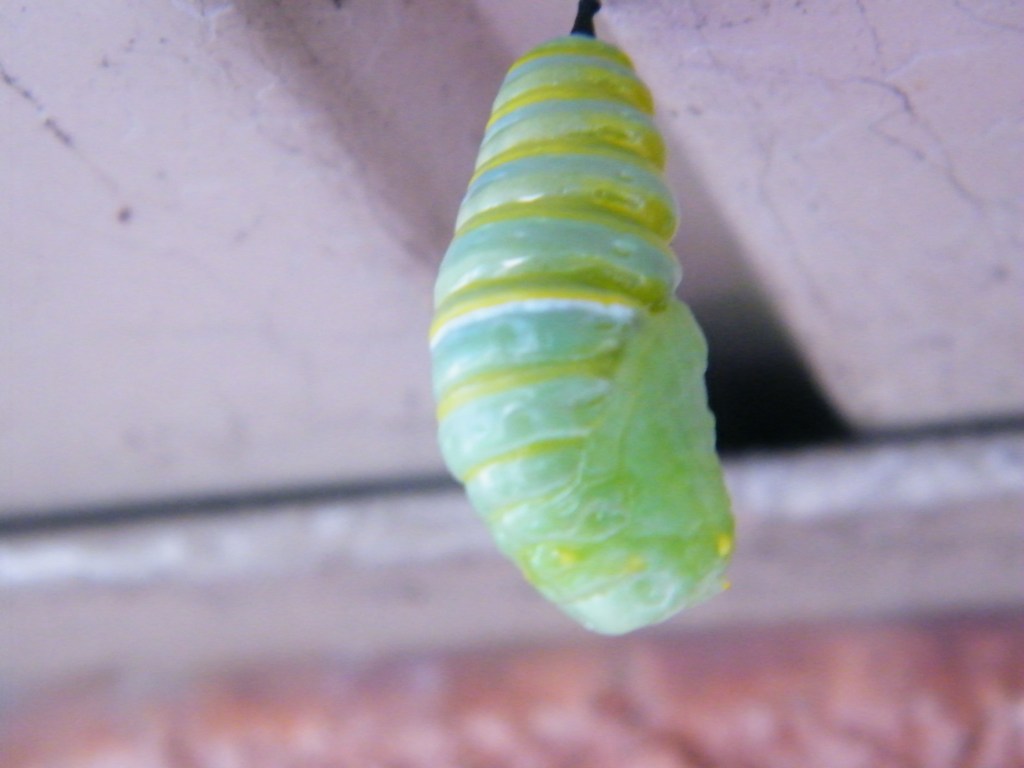
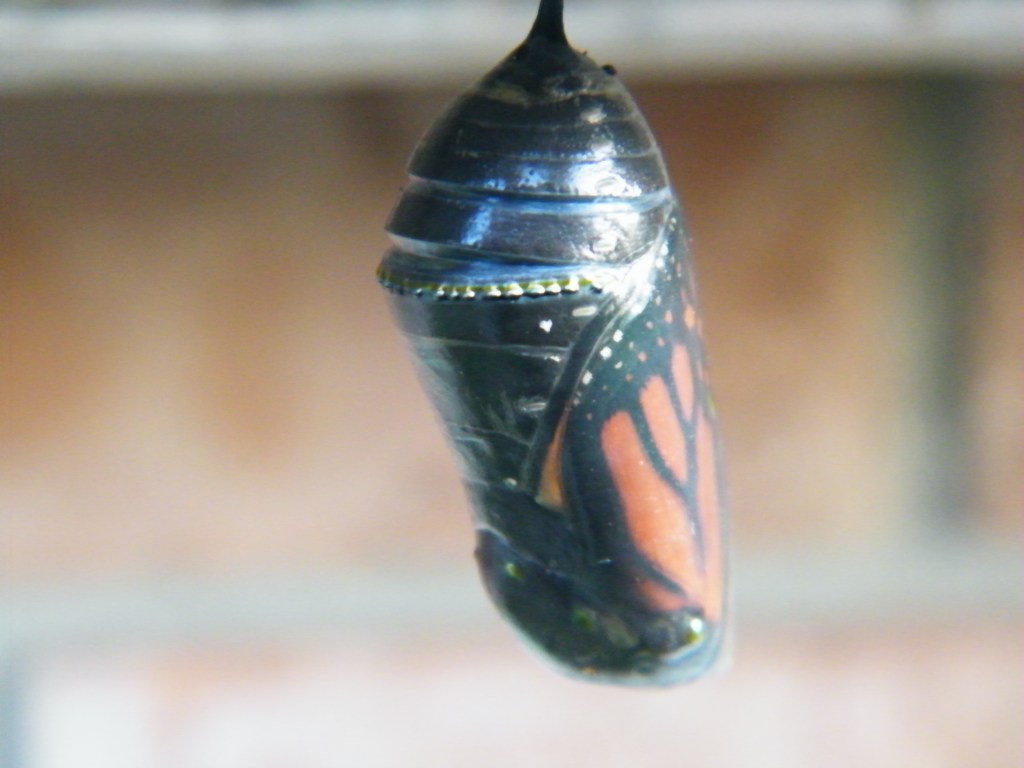
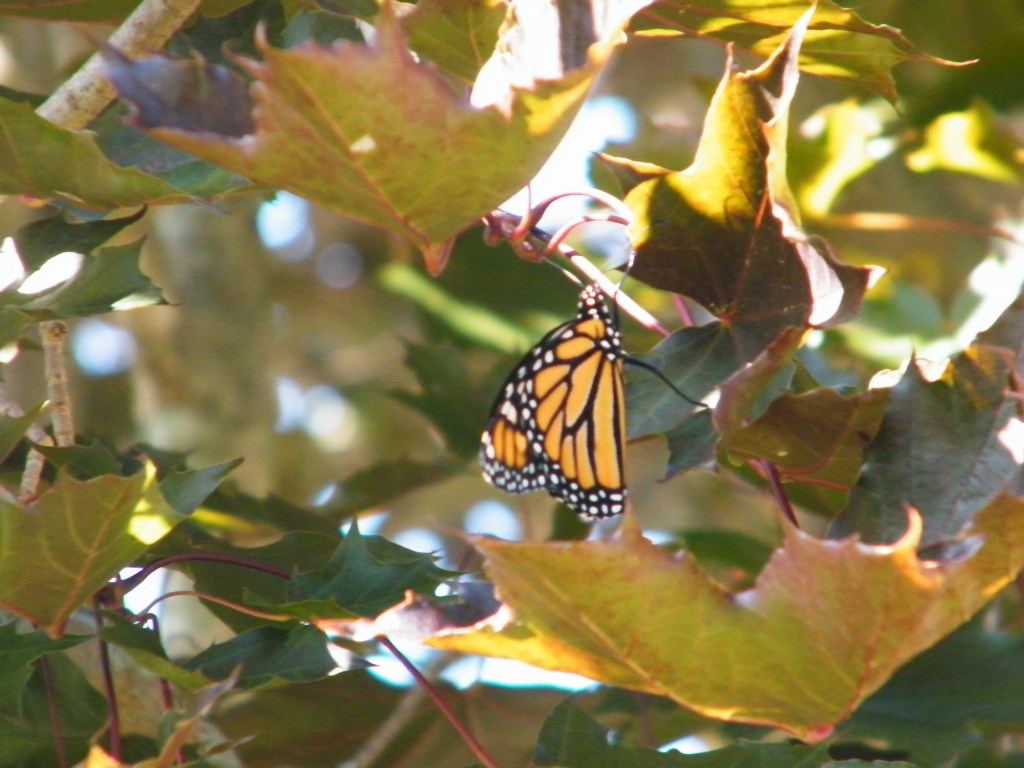
It was so amazing watching the development of chrysalis #1. It started off as an iridescent green, but got darker as time progressed. At daybreak on September 5th the wings were clearly visible through the darkened chrysalis. From previous times, I knew it would be emerging within a few hours. It was the 1st day of school. It was really wonderful to see all the children again at my school crosswalk on Highway 93. To make my day even that much better, when I arrived home at 9:25 am, it was so exciting to see that the monarch butterfly had emerged. A newly emerged butterfly will wait two or more hours before it can fly. New wings are small and shriveled, so the butterfly pumps body fluid through its wing veins in order to make them get bigger. Then, the monarch has to wait for air to replace some of the fluid. Until this happens, the monarch cannot fly, and its wings are easily damaged. After a couple of hours the monarch took flight and took refuge in my shaded camouflaged red maple tree. Thirty minutes after that it took flight for good.

The more I observe nature, the more I am astounded by the complexity of it all. Moths are another field of study and observation in itself. Unlike a butterfly chrysalis, which is a hard, smooth covering enveloping the insect inside as it transforms from a caterpillar to a butterfly, a moth spins cocoons from silk, encasing themselves in the silky layer. Chrysalises are usually found hanging from a structure, while cocoons are typically buried in the ground or in leaf litter or attached to the side of a structure. One thing that butterflies and moths have in common is that both are holometabolous. Which means that the insects undergo complete metamorphosis in their four life stages, according to the Library of Congress. I kept searching for that third caterpillar, but it was eluding me. Where did it go? I finally discovered its brand new chrysalis on the lip of our basement window threes days later. Figuring this would be my final butterfly of the season from my garden I kept my focus on the second chrysalis. Depending on the conditions, normally it takes 10-14 days here in my area of Canada for the monarch butterfly to emerge from the newly formed chrysalis.

So it was such an extreme shock to discover after coming home from my morning crosswalk that my third (and supposed to be final monarch) had emerged after only six or possibly seven days. My second monarch chrysalis appeared to be still several days away before that butterfly would emerge. So what had happened? I’m guessing with this chrysalis right in front of the window, the intense heat from the sun radiating from the window must have sped up the metamorphosis to around half the time it usually takes. I went in to get my camera and when I came out the butterfly lay in a crumpled heap on the ground. The heat from the window must have been too unbearable, and the butterfly just dropped to escape the heat. I was so concerned. The butterfly started walking along the hard, hot sidewalk while dragging its wings. Trying to get off the hot concrete, it ventured into the grass towards my pollinator garden. Every step was a struggle. With the wings dragging in the grass. I was so afraid it would damage it’s tender wings in the grass. In all my 65 years I have never handled a live monarch butterfly. I am very much a purest when it comes to nature. I don’t raise monarchs indoors. I don’t handle them. I don’t interfere. I let nature run its course as nature intended. My goal in the end is that it produces a stronger strain of monarch butterfly. There is a grave concern about raising monarch butterflies in captivity. An excellent article that sheds light on this is by science based Xerces Society and is titled, “Keep Monarchs Wild: Why Captive Rearing Isn’t the Way to Help Monarchs“.

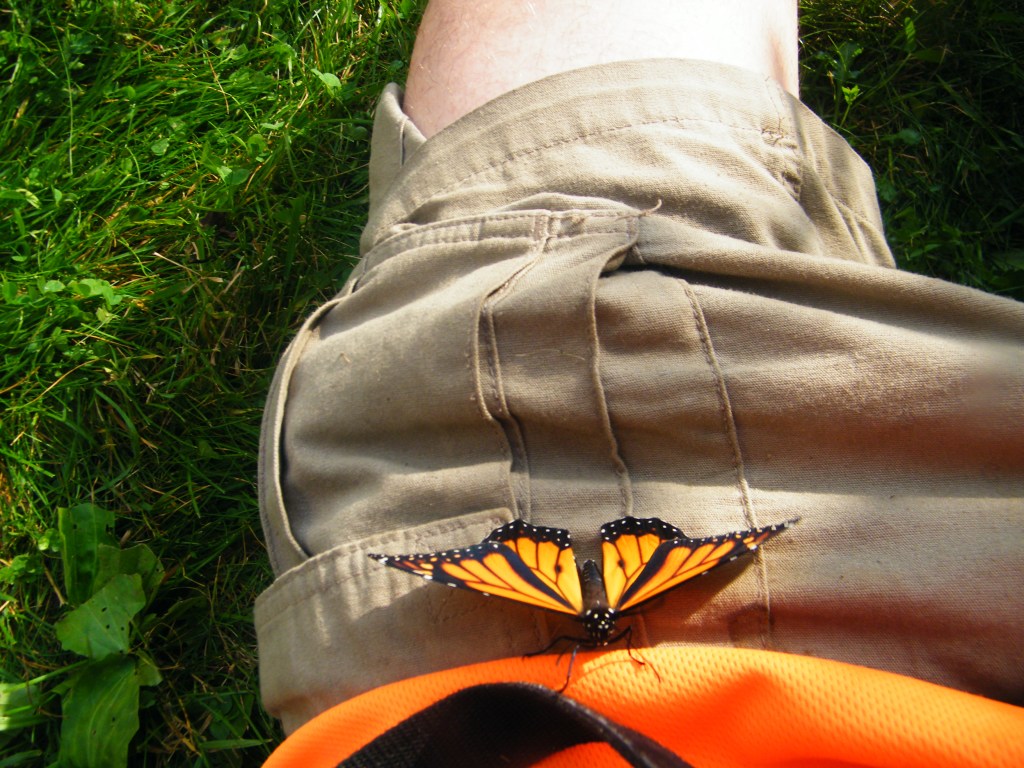
But it was my fear that this one particular monarch butterfly was not going to survive. While laying in the supine position, I put my open hand directly in front of the direction where the monarch was struggling to travel. It walked right onto my open hand. I tenderly moved my hand from the ground and on to my lap part of my body. It stepped off and for the very first time it rested. It was almost as if this troubled monarch butterfly sensed it was now in a safe place. For the next two hours it rested on my lap. I propped myself up on my elbows to observe. Occasionally it would open and close its wings. As the body fluid kept being pumped through the wings, they were visibly getting bigger and stronger looking. After a couple of hours, the butterfly started to walk up my body, as if searching for a higher location. It latched onto the lanyard that has my crossing guard whistle. While it continued to latch onto the lanyard, I got up and carried it to a nearby sedum plant (which butterflies love). My beloved butterfly may not have been ready to drink nectar just yet, but at least it would have a great launching pad when it was ready to take flight. I rested the lanyard on the sedum and without handling the butterfly the monarch walked onto the sedum. I hadn’t yet eaten myself all day, so I went in to fix a quick lunch. I checked on the butterfly fifteen minutes later and it was still there. I went back in the house to do some errands and it was still there when I came out to check another 15 minutes later. This was then repeated the third time. The fourth time I was heading up for my 1:00pm crossing guard duties, my beloved monarch butterfly was no longer there. It had taken flight. Beyond their delicate, ephemeral beauty and awe-inspiring migrations, the monarch butterfly provides huge biological and economic functions as they journey. They feed on nectar through a long proboscis. Each monarch will simultaneously pollinate as it moves from flower to flower while gathering its sugary energy drink. Providing pollinator gardens is of utmost importance if the monarch is to make it to its destination in Mexico. They are called Waystations and I would liken them to an aid station in a long distance ultra. They provide the energy to keep going. Monarch Watch has a registry where you can register your waystation. When a monarch butterfly pollinates flower blossoms, they provide an essential service, making possible the proliferation and production of many essential fruits and vegetables.


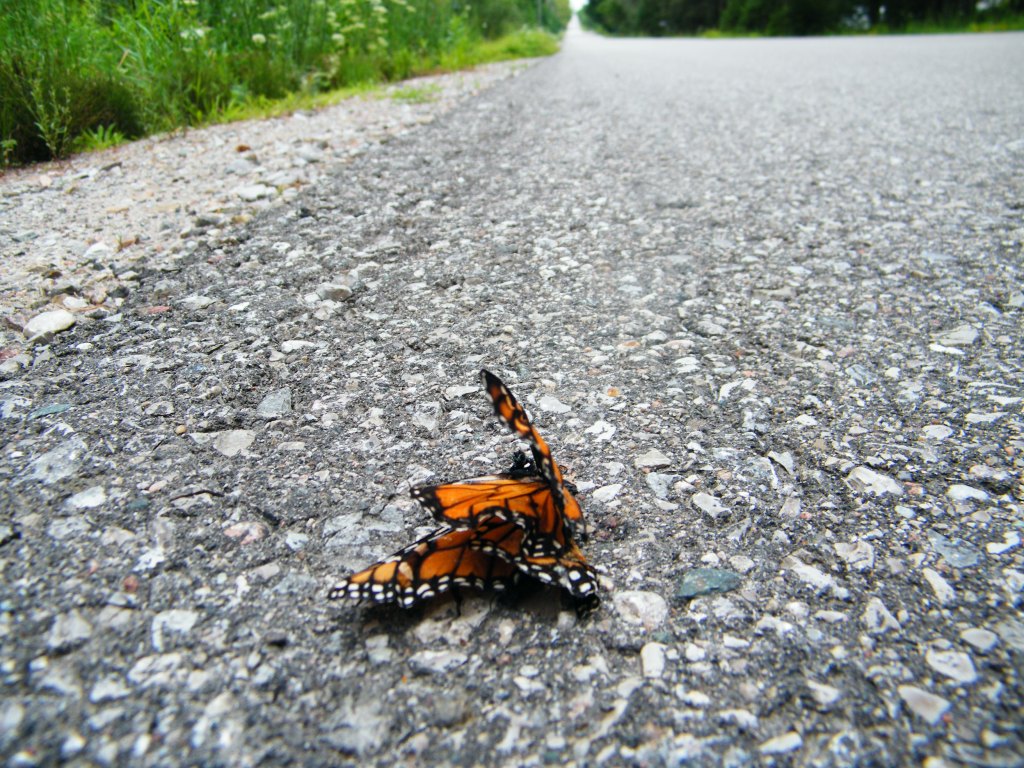
Everyday I think about that very special monarch butterfly that captured my heart. It’s beginning moments in the butterfly stage was very troubling due to the extreme heat dome effect of the window. Yet I am sure this will not be the only challenge this butterfly will face on its 4,300 kilometer migration to Mexico. Will it face any extreme weather events? Such as high winds, heavy rain, harsh temperatures? These things will batter this fragile insect on its long journey. Will it find enough nectar producing flowers to refuel? Will it find its way to the oyamel fir tree forests of Central Mexico? In 2019 I took the bus to Mexico to help run unregistered relay sections of the Monarch Ultra there. Flying was slightly cheaper, but I travelled by bus for a lower travel footprint. It also gave me an idea of what the Monarch faced during its migration. I was startled by what I observed. I would travel for hours and see nothing but massive industrial style farms, growing only a single monoculture crop. Either corn or soybeans which are usually genetically modified. What is the monarch to eat on their migration? A tornado struck Dallas just before my bus got there, littering the roads with debris. And delaying my bus for several hours. How would a monarch butterfly survive something as violent as a tornado? Sadly they most likely wouldn’t. As the migration path narrowed, it was disheartening to witness the roads littered with dead monarchs that had been struck by vehicular traffic. I witnessed the carnage particularly when I was personally on the roads running in Mexico. To migrate all that way from Canada, travelling a few thousand kilometers over several weeks. But not make it to your destination because of a collision with a car or truck is so heartbreaking.
Despite all odds some monarch butterflies do make it to their destination of the cool and moist microclimate in the Oyamel pine forests of the Monarch Butterfly Biosphere Reserves in the Sierra Madre mountains in Central Mexico. This will be at the same location where an ancestor departed earlier in the spring four or five generations ago. Even in the butterfly reserve the monarch butterfly will continue to face major challenges. Those special forests are being logged. Journey North in an article on The Monarch’s Forest Ecosystem mentions that only 2% of the original forest remains. Because of poverty of the inhabitants of the towns and communities within the reserve, many have resorted to illegal logging to survive. Plus, as talked about by Monarch Ultra director and co-founder Carlotta James with the amazing British podcast host Craig Lewis of Running Tales podcast, much of these logged out areas are being converted into avocado plantations, which do not provide the forest canopy like the Oyamel Fir forests. If the remaining Oyamel forests are thinned too much, it becomes too warm for the monarch butterflies survival, because the forest canopy is breached. In these wintering grounds the monarch require cool temperatures that slow their metabolism. This is called winter diapause, a hormonally controlled state of dormancy that aids winter survival. In this state, at cool temperatures they burn less energy.

The Monarch Butterfly is in serious trouble. On July 21, 2022 the International Union for the Conservation of Nature placed the migratory monarch butterfly on its Red List of Threatened Species and classified it as endangered. Yet out governments and municipalities don’t seem to be getting the message. Monarch Watch mentions “Development (of subdivisions, factories, shopping centers, etc.) in the U.S. is consuming habitats for monarchs and other wildlife at a rate of 6,000 acres (9.4 square miles) a day – that’s 2.2 million acres each year.” This is also happening at an alarming rate where I live in Southern Ontario, Canada. Widespread adoption of herbicide-resistant corn and soybeans has resulted in the loss of more than 100 million acres of monarch habitat in recent years. The planting of these crops genetically modified to resist the non-selective systemic herbicide glyphosate (Roundup) allows growers to spray fields with this herbicide instead of tilling to control weeds. Milkweeds survive tilling but not the repeated use of glyphosate. This habitat loss is substantial since these croplands represent a significant portion of the summer breeding area for monarchs.


Then as previously mentioned, there is the habitat loss of the wintering grounds of the monarch butterfly in Mexico. This special forest is shrinking every year. This year for 2023 the Monarch Ultra is partnering with local Mexican environmental charity Nación Verde who have set the goal of planting 100,000 oyamel fir trees along 100 hectares. The oyamel forests house the appropriate conditions that allow the annual winter diapause of the monarch butterfly, giving them protection against strong winds, rain and even snowfall or hailstorms. They also serve as water collectors, and provide dew retention, which allows the monarch butterfly to hydrate without the need to waste energy flying in search of water. The oyamel are the main tree where monarchs use as home during the winter months. When carrying out reforestation, local residents are hired. This allows people to fight poverty and guaranteed that the family remains together, since the fathers or the mothers do not have to migrate to other cities in search of employment. One of the main problems that affect Cerro Pelón is the lack of employment for the people who live nearby, which leads to clandestine logging, causing deforestation and habitat loss not only for the monarch butterfly, but also for the forest inhabited by other species such as squirrels, rabbits, opossums, coyotes and many different birds. Without these forests, monarchs won’t have a place to spend winters. This could be the final blow for the survival of this species.
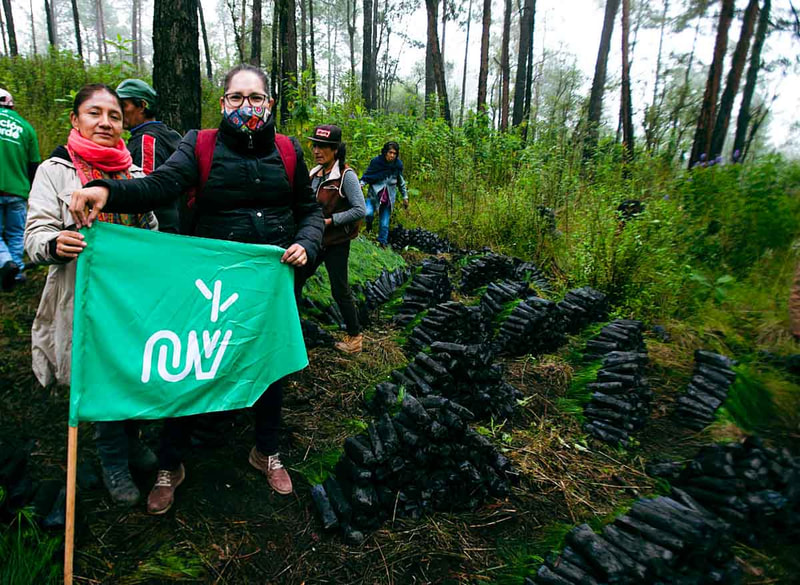
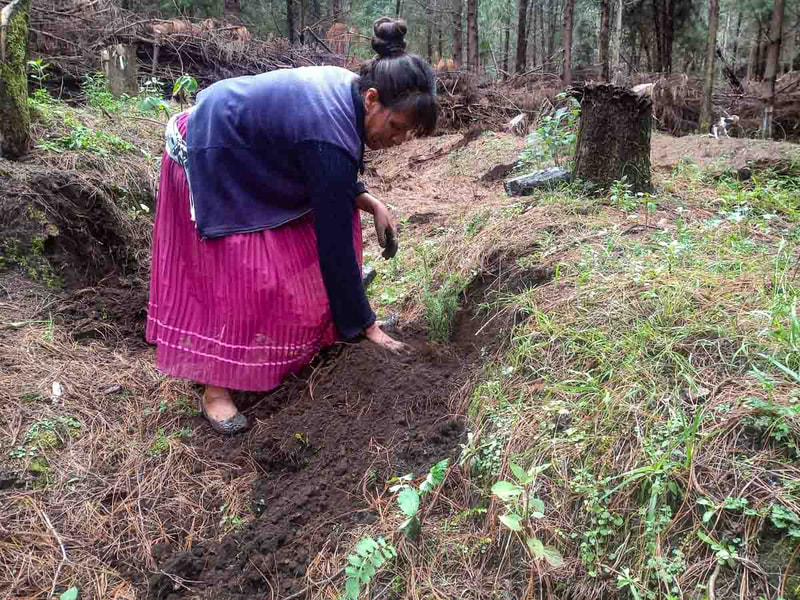

The cost to meet this objective requires $2,500,000.00 Mexican pesos. That’s the equivalent of US$137,000. Reforestation is not only planting trees. It’s a series of activities required to properly plan oyamels and guarantee its success, such as the preparation and cleaning of the land, transportation of the plant, and the personnel to carry out the plantation. For the Monarch Ultra we have a fundraising goal towards the Nación Verde tree planting initiative of $5,000. You can donate to this great cause here. Be sure to also check out our 10k monarch race and festival held at Peterborough, Ontario on October 15th. Our friends in Mexico will be hosting a 54k ultra along with a monarch festival on November 26th. The run starts at the city of Zitacuaro and finishes at the monarch sanctuary of Cerro Pelón. A really amazing extreme ultra athlete to follow is Anthony Battah. He is currently running the entire 4,500 kilometers from Montreal, Canada to the Monarch Butterfly Biosphere Reserves in Mexico to raise awareness for the monarch butterfly. His website is called Ultra-Trail Monarch. His journey will take 90 days, with plans of arrival on November 1, 2023.

Everyday I think of that troubled monarch that built its chrysalis right in front of my window. I feel really bad for the heat dome effect it had on that poor butterfly. On a broader scale, the actions of humans have caused the numbers of monarch butterflies to go into serious decline. To the point where they are now listed as endangered. With each passing year, this small but mighty insect is moving closer to extinction. Humans have caused the problem, and it is only through human action can there be any hope of a solution. 🦋


 theoldfellowgoesrunning
What an amazing story of your monarch butterflies, Carl!
This was quite educational for me. I had a rough idea about caterpillars, chrysalis and butterflies from my childhood, but there were so many things in your article that were new for me. I didn’t know about the molting process, for example.
So kind of you to sit still for 2 hours so that the troubled butterfly could rest! I love that photo of it next to your T-shirt. So fitting you were wearing orange!
Thank you for your ongoing efforts to protect the monarch butterfly. It’s an incredible insect. Considering the amount of human destruction, it’s a miracle that it even survived to this day.
All the best with your 10k race and festival on 15 October! I’m sure it will be an enormous success and benefit the monarch butterfly greatly!
LikeLiked by 1 person
Thank you so much for reading and for your generous comment, Catrina. It was such a previous 2 hours. I believed at first that there was not a chance this butterfly was going to survive. Then to witness it get stronger looking before my eyes.
The monarch butterfly really is an incredible insect. It is hard to imagine a world without them. As one of the more studied insects they are like a “canary in a coal mine” analogy for ecosystem health. Declines in pollinating insects and songbirds tend to go hand in hand.
Thank you for your good wishes for the Monarch 10k and festival. Looking forward to a great day. 🦋😀
LikeLiked by 1 person
My boys’ elementary school has a successful, though quite small, monarch garden behind the school where I pick up the boys. Every year the second graders study them extensively. It is outdoors, and kids are always come back there and crowd around the litttle chrisalys (Ok I can’t spell it).
I’m so glad the struggling one lived!
LikeLiked by 1 person
Thank you for sharing, April. Love that schools are doing that. Our school in Hillsdale also had their monarch gardens. Lots of milkweed and monarchs choosing the gardens to establish the next generations of monarchs. Such a great experience for the children.
Sadly about 80% of the gardens were lost this past summer break as it was paved over for more parking. Which really broke my heart. Any eggs, caterpillars or chrysalis that may have been there were lost to the bulldozer. This seems to be happening so much everywhere. Next spring we’re just going to have to start over and replant in another area not paved over. 🙏🦋
LikeLike
That’s so sad. I see this with some of my favorite birds. And I think what is this world going to be like without animals? And without pollinators none of us can make it. It’s a very serious problem.
LikeLiked by 1 person
Exactly April. It really is a very serious problem. Birds are the other thing you mentioned. Less insects around equates less birds to feed off of them.
LikeLike